Indian Wedding
Indian Wedding Celebration

Indian weddings are large, colorful, and tradition-rich, symbolizing so much more than the joining of two individuals. Indian weddings are elaborate cultural celebrations that unite families, friends, and communities, lasting anywhere from several days to an entire week. The ceremonies conducted at the time of the wedding are not only symbols of love and fidelity but are also thought to bring happiness, health, and prosperity to the couple and their families. What makes Indian weddings truly special is that they showcase a wealth of variety, with each part of the country bringing something different in terms of customs, attire, music, and cuisine to the wedding celebration. For instance, South Indian weddings could include traditional silk sarees and classical music, whereas North Indian weddings are complete with brilliant decorations, folk dances, and jubilant processions. The bride's outfit, for instance, an intricately embroidered lehenga or saree accompanied by traditional adornments, and the groom's ceremonial attire like a sherwani or kurta, attest to the prosperous cultural lineage of the region. Music and dance are integral elements that infuse energy and enthusiasm, with acts varying from vibrant bhangra in Punjab to devotional songs in Bengal. Food holds a paramount position, with extensive spreads of local delicacies and sweets that capture the colors and customs of each group. The food is as much about taste as it is about expressing love and hospitality to guests. Finally, Indian weddings are a lovely mixture of tradition, celebration, and coming together, giving a glimpse into the richness of the country's culture. They are priceless moments when generations unite, celebrate customs, and have memories to last a lifetime celebrating life, love, and the bond that holds family and community together.
Rituals and Traditions
The Indian wedding ceremonies incorporate a great number of significant pre-wedding and core rituals that emphasize tradition, spirituality, and happiness. Prior to the wedding day, pre-wedding celebrations such as Haldi and Mehendi are indulgently celebrated, where the bride and groom's skin is applied with turmeric paste to represent purity, health, and protection from evil, and where henna patterns are intricately sketched on their hands and feet to add beauty and bring blessings. These rituals are filled with laughter, music, and family bonding, as relatives and friends come together to prepare the couple for married life. The main wedding day is marked by sacred rituals, the most important being the exchange of vows around a sacred fire during the ‘Saptapadi’ ceremony. When the couple takes seven steps together, they vow to support and stand by one another against life's adversity, indicating partnership, love, and commitment. The steps are followed by Vedic chants, which invoke blessings from gods and ancestors, strengthening the religious significance of the union. Each activity, ranging from the sacrifices offered into the flame to the ceremonies conducted by priests, is intended to cleanse the atmosphere and bring sacred grace into the life of the couple. These traditions are not merely about fulfilling formalities but also about building emotional connections, promoting trust, and making memories that cement familial relationships. Together, these rituals blend spirituality, beauty, and tradition to produce Indian weddings as personally involved and culturally vibrant celebrations of love, commitment, and divine blessings.
Colors, Attire, and Music
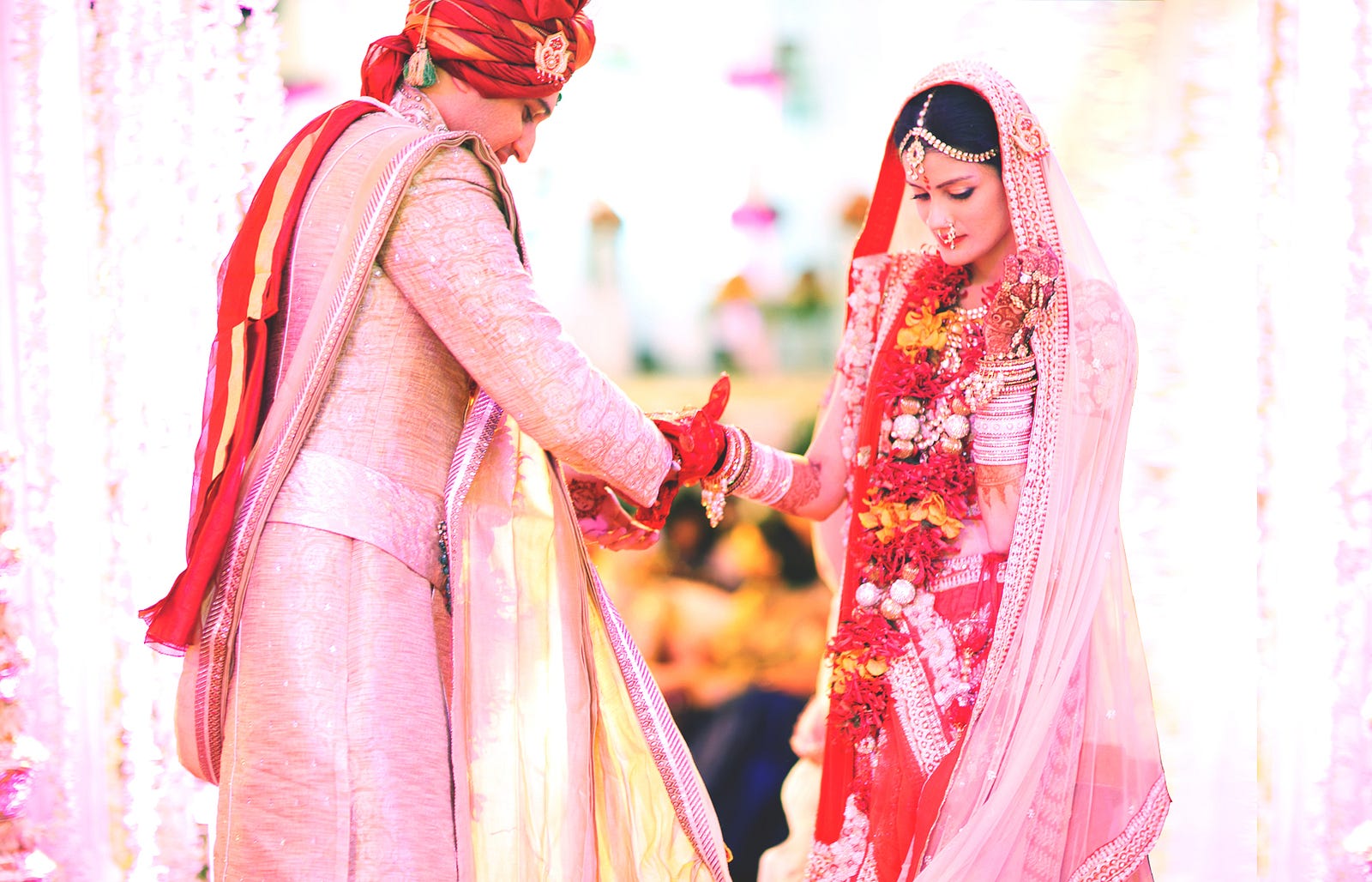
Indian weddings are a visual experience, celebrated through vivid colors, lavish ornaments, and celebratory music that provide an unforgettable ambiance. Vibrant colors such as red, gold, and green find significant importance in the decor as well as clothing, representing wealth, love, and fresh starts. The bride is generally dressed in a red or maroon lehenga with fine embroidery and complemented by traditional accessories, exuding sophistication and cultural heritage. The groom himself is dressed in the presence of the bride in a sherwani, normally in gold or cream color, along with a turban to complete the royal look.
Music forms an integral part of bringing the celebratory mood alive, and classical instruments like the shehnai, tabla, and dhol bring alive the musical and rhythmic notes. These musical performances are not background pieces at all but an integral part of the experience, punctuating important moments and inviting guests to join in the festivities. Another highlight is dance, where community members, friends, and family gather for choreographed routines or impromptu displays of joy. Folk dances, bhangra, and other local forms add energy and playfulness, and group singing sessions foster a sense of belonging. Every aspect, right down to the flower arrangements and vibrant drapes, is carefully planned to produce an atmosphere of warmth, hospitality, and celebratory spirit. Every detail, from clothing to music, lends itself to a sense of national pride and collective jubilation. Combined, they transform Indian weddings from mere ceremony into an outright celebration that pleases the senses, tightens bonds, and produces memories that linger on long after the event. The sumptuous mix of color, music, dance, and heritage makes each wedding a special and celebratory event, treasured by all who gather.
Food and Hospitality
Food plays a big part in Indian weddings, you know. It's something people really look forward to. These meals show off the region's cooking traditions and that whole sense of everyone coming together. Families go all out with the spreads. They prepare all sorts of sweets and savory stuff that hits every taste. Things like laddoos, gulab jamun, and jalebi bring the sweet vibes, kind of standing for all the happiness and fun of the day. Then you've got the savory side, with paneer curries, biryani, those thick gravies, and rice that's full of aroma. It all makes for hearty eating that pulls people in close.  Meals aren't just about filling up, though. They stand for love and giving, showing respect too. Hospitality means a lot in Indian culture, like it's almost sacred. Guests get treated like they're family. Hosts make sure nobody leaves feeling left out or still hungry. Lately, weddings have started going greener. People see how sustainability matters now. They use decor from stuff that breaks down naturally, switch to reusable plates and utensils, and try hard to cut down on wasted food. Some families even give leftovers to charities nearby. Others pick menus heavy on plants to ease up on the planet's load. Basically, it's this mix of old ways and new smarts.Still, no matter how fancy it gets, the real core is those shared plates and the good times. Could be a small get-together or something over-the-top. Food keeps bonds strong, helps make lasting memories, and nods to the traditions that turn these events into something special. With smart hosting and eco tweaks, the joy keeps flowing without messing with the world or folks around.

An Indian wedding. It's not just some ceremony. It's this whole experience that really shows off the country's rich heritage. You know, the spiritual side too. And all that collective joy people share.

Comments
Post a Comment